If you’ve been away from the world of software for a while, or if you only know the modern “App Store” era, you might be surprised by how much the actual delivery of software has evolved.
In the “olden days,” software was a physical product. You bought a box at a store containing floppy disks, then later CDs and DVDs. Eventually, we moved to internet downloads, where you’d buy a license key and enter an activation code to unlock the program.
But today, something deeper has happened. Our web browsers have undergone a quiet but massive makeover. They are no longer just windows to read articles; they are powerful engines capable of running complex software.
At Beginner Projects, we embrace this. We provide two paths for you to start your journey: Python apps (which run as GUIs or Flask apps) and JavaScript apps that run directly in your browser.
The Magic of the Browser: No Installers, No Headaches
Why start with a browser-based app? Because the friction is gone.
Gone are the days of bloated installers, “DLL not found” errors, and operating system incompatibilities. Today, using JavaScript and modern CSS, we can build apps that look and feel like expensive, professional software—all without requiring the user to install a single thing.
To understand how huge this shift is, let me tell you a story about the “Old Way.”
In 2010, I used a tool called GameSalad to make iPhone apps. The actual “coding” part was manageable, but the distribution process was a nightmare. Preparing the app for iTunes was so complex that I almost gave up. My first app took me two weeks to build, but four weeks to try and ship. No matter what I tried, I couldn’t crack the code of submitting it to Apple. Back then, tech articles described the process as “formidable.”
Fast Forward to Today: The “Celebrations” Experiment
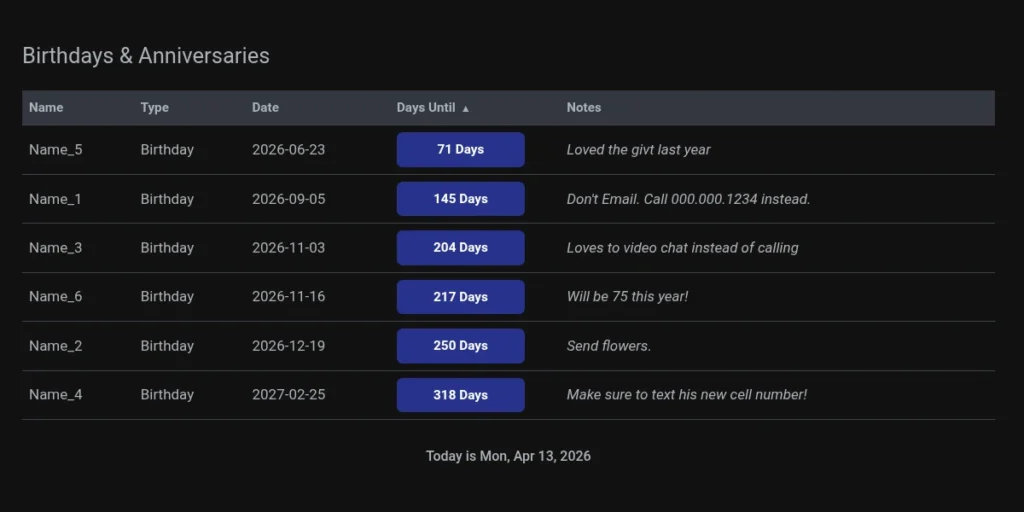
Contrast that nightmare with my recent experience creating the [Celebrations App].
Using “Vibe Coding,” I had a workable version of the app in about 30 minutes. Over the next few days, I added features and refined the look—all with the assistance of AI. I didn’t spend weeks debugging syntax; I simply told the AI how I wanted the app to look and function.
The result is a practical, useful reminder app to keep track of family birthdays and anniversaries. And the best part? It is now yours.
Your First Step into Software Creation
I have made the Celebrations app available on our Free Apps page. To protect my privacy, I’ve replaced my family’s real names and dates with placeholder values, but the functionality is 100% intact.
Here is how you can make it your own:
- Grab the code: Download the skeleton code from our site.
- Option A (The Vibe Way): Feed the code to your favorite AI and say: “Update this app to include my family’s birthdays and change the color scheme to dark mode.”
- Option B (The Manual Way): Open the
celebrations.jsfile, find the placeholder names, and simply type in your real data.
If you make a clever improvement or add a feature that you love, please submit it to us! We would love to feature your version in a special community section.
The Path Forward: Start Small, Scale Up
You don’t need to start by building a complex desktop operating system. Shipping a JavaScript app that runs in a browser is not “cheating”—it is a brilliant way to start. It allows you to see immediate results without the “formidable” barrier of distribution.
Once you feel comfortable with that, you can move up to Python GUI apps and more advanced tools.
The goal isn’t to make you a master of syntax on day one. The goal is to get you developing practical apps that solve real problems. The rest—the logic, the architecture, the deeper knowledge—will come naturally as you edit and improve your tools.
Welcome to the Vibe Coding club. We don’t care what the critics say about “self-made” software. We only care that our tools are useful in a way that commercial software never will be.
Stop observing. Start tweaking. Build something today.